
How many restrooms does a race need?
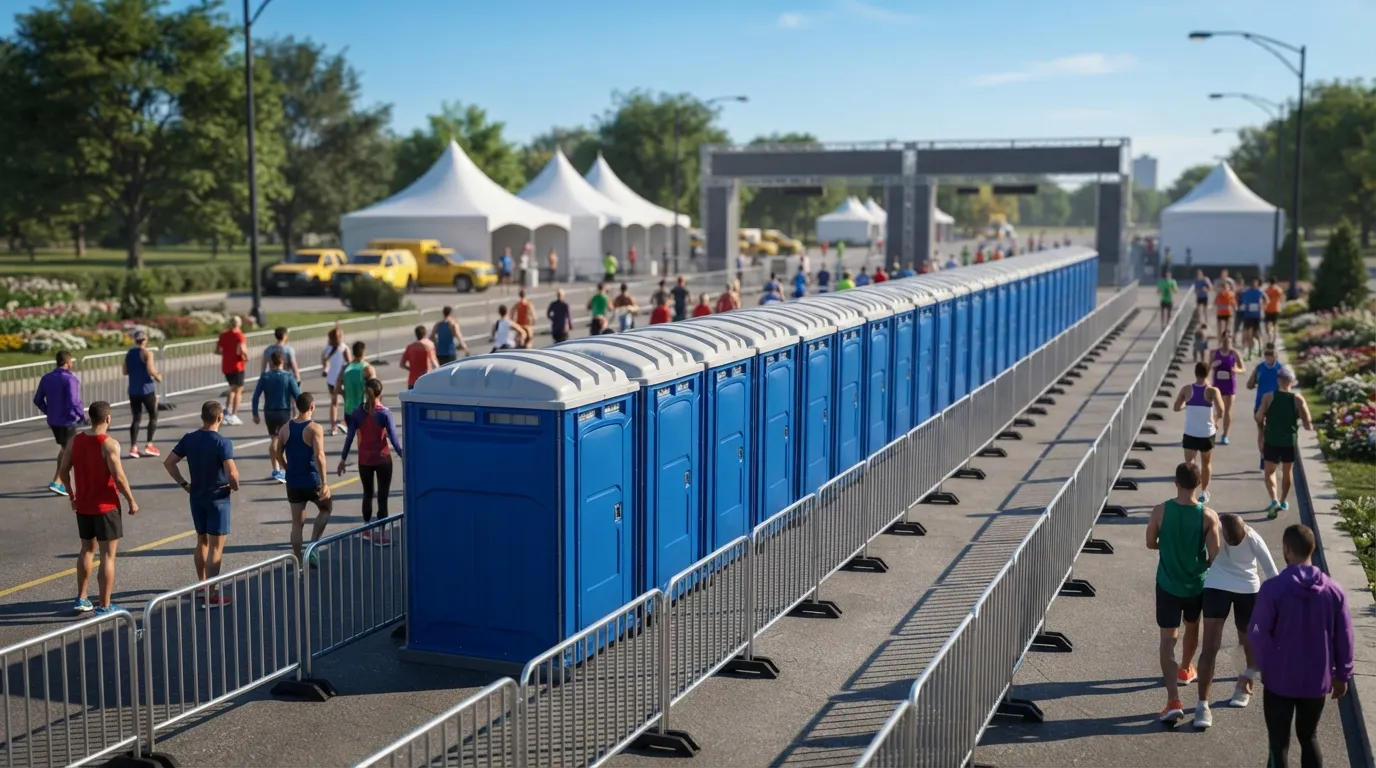
Start with field size, then split units between the start corral, aid stations and the finish chute. A 5K with 300 to 500 runners typically clusters most units at start/finish and drops one or two at a mid-course aid station. Half marathons and longer races spread the load, since runners pass fixed points once instead of circling back every mile, a pattern covered in more depth on portable restroom rental. Standard porta potty rental covers most placements; ADA accessible porta potty units belong at every cluster too. ADA Standards section 213.2 requires at least 5 percent of clustered single-user units to be accessible, and never fewer than one, so a bank of 12 standard units needs at least one accessible unit sitting right beside it, not off in a side lot.
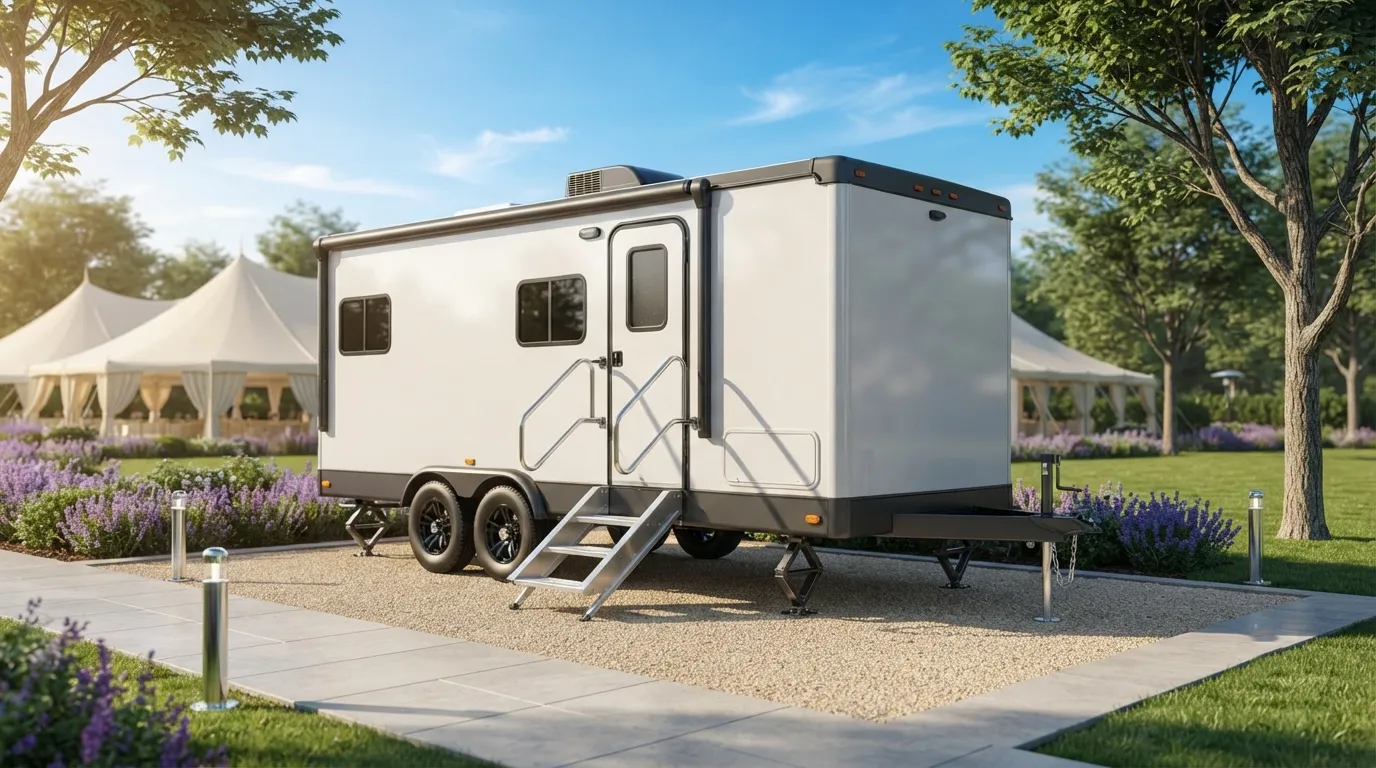
Race organizers running a full weekend event, packet pickup Friday through Sunday races, often mix in a deluxe flushable porta potty near VIP or sponsor tents. For a bigger production with showers for staff or a media area, a restroom trailer rental, 4 stall restroom trailer or 8 stall restroom trailer handles higher traffic without the line backup a single bank of standard units creates, and a shower trailer rental covers staff needing to clean up after setup and teardown. Chandler races that stage near larger venues sometimes need power run out to timing tents and sound equipment too. If you're wondering how to brace a temporary power pole for timing mats or a finish-line arch, keep the base plate on stable, level ground and guy it against wind gusts pushing on any attached banners, since a loaded pole under a race banner catches more wind than an empty one. Pair that setup with a temporary power pole quote early, because permitting and delivery lead time both run longer than most organizers expect.
Where should units go along the course?
Placement matters more than raw count. Units belong at the start line, the finish chute, and any aid station where runners spend more than a few minutes, not mid-block where nobody stops. OSHA 1926.51(c) sets construction toilet ratios by headcount, and while a race isn't a job site, the same logic applies: more people funneling through one point means more fixtures at that point, not spread evenly across empty stretches of road. Chandler's downtown routes and canal-side paths both work for races, but each has different staging needs, tight sidewalks near downtown versus wider shoulder access along canal trails, and the same siting questions come up for porta john rental at other outdoor events.
Ground surface matters too. ADA Standards section 302.1 calls for stable, firm, slip-resistant surfaces, which rules out soft turf or loose gravel for accessible unit placement. Set those units on asphalt, packed dirt or a leveling mat instead. Keep a 36 inch clear path per ADA Standards section 403.5.1 to every unit, especially where cones, barrier fencing or cable runs cross the route. If your race uses temporary fence rental or crowd control barrier rental to manage spectator flow near the finish, route that fencing so it doesn't block the accessible path to restroom clusters. A porta potty placement guide walks through sight lines and delivery truck access in more detail, and every delivery still needs clearance behind the truck to unload, similar to the 60 feet of straight clearance a roll-off dumpster rental delivery needs.
When should units be delivered and picked up?
Delivery usually happens the day before or early morning of race day, with pickup scheduled for right after the course clears. Chandler Porta Pros times drops around road closures and street sweeping schedules so units are staged and serviced before runners arrive. A single-day standard unit rental runs in the same range covered on porta potty rental per day, and weekend events, packet pickup Friday into Sunday's race, often make more sense priced as a multi-day rental instead of stacking daily rates. Check porta potty rental cost for how those numbers compare across rental lengths, and monthly porta potty rental if your race season runs several weekends back to back.
Races near Sun Lakes, 6.2 miles south of Chandler, or Queen Creek, 16.9 miles east, sometimes pull from the same delivery routes as Chandler proper, so booking early secures trucks during busy race weekends. For any race that also needs debris cleanup after the finish line breaks down, a roll-off dumpster rental staged near the finish area handles banner material, cups and course signage faster than bagging it by hand. Large-scale events sometimes add a light tower rental for early starts before sunrise, and races drawing runners from farther out, like Maricopa or Guadalupe, should confirm delivery windows even earlier.
How far in advance should I book race restrooms?
Book 3 to 4 weeks out for anything over 300 runners, sooner during spring race season when Chandler hosts multiple weekend events. Standard units and ADA units both draw from the same limited delivery fleet, so early booking locks your count before trucks fill up.
Do I need ADA units for a running race?
Yes. ADA Standards section 213.2 requires at least one accessible unit per cluster, minimum 5 percent of units. Place them at start, finish and any aid station, not just one central location for the whole course.
What size race needs a restroom trailer instead of standard units?
Races over 1,000 runners, or any event with a staff hospitality area, usually benefit from a 2 stall restroom trailer or larger. Standard units still work for the course itself; trailers cover VIP tents and staff zones better, and a luxury restroom trailer suits sponsor hospitality areas at bigger races.
Can units be moved once the course is set?
Units can shift before delivery, but not easily race morning. Lock your placement plan during the walkthrough, since moving a serviced unit mid-morning disrupts servicing schedules and blocks part of the route.
How does municipal road closure timing affect delivery?
Delivery trucks need road access before closures go into effect. Coordinate your restroom vendor's arrival window with your race's traffic control plan so units land before barricades go up, not after, and check OSHA portable toilet requirements if your race also has a working crew on site before gates open.
Next step
Get a delivery date
Tell us the address, the dates and the headcount. We size the order and confirm the route.