
Where should a porta potty go on site?
Start with the ground. A standard unit is about 44 by 48 inches on its footprint and stands close to 92 inches tall, so it needs a level, stable pad, not a slope, and not loose gravel that shifts under the base. ADA Standards section 302.1 calls for surfaces that are stable, firm and slip resistant, which matters as much for a job site in Chandler as it does for a downtown event. Keep the unit within reach of the service truck's route, and never tuck it behind a fence line or dumpster where the pump hose can't reach. If you're placing an ADA accessible porta potty, you also need a 60 inch turning circle per ADA Standards section 304.3.1, and the door has to clear 32 inches under ADA Standards section 404.2.3. For construction site services with multiple trades on site, spread units so no crew walks more than a short distance, and check our porta potty placement guide companion page for headcount math. Chandler sites near Sun Lakes, about 6.2 miles south, often share the same flat-lot layout, so the same placement rules travel well across both.
Can you place a porta potty in the street or right of way?
Placement in the public right of way needs confirming with the city before you commit to a spot. Chandler has not published a fixed fee or rule set we can cite here, so treat curb placement, sidewalk closures and street-adjacent pads as a call to the city first, not a guess. This is the same caution that applies to a dumpster placement permit: a dumpster placement permit cost and process is a municipal question, and it varies by street type and duration, so don't assume last year's answer still holds. If your project sits near a event venue or a shared lot, loop in the property manager too. For most residential and commercial jobs, keeping the unit on private pavement or a graded pad avoids the right-of-way question entirely. When in doubt, our porta potty permit requirements page walks through what to ask the city before delivery day, and Chandler Porta Pros can hold a delivery date while you confirm.
Why does placement affect service and pricing?
A bad pad location costs you twice: once in service delays, once in a trip charge if the truck can't reach the tank. Every unit needs a route the pump truck can use without backing across landscaping or curbs, and ANSI/PSAI Z4.3 sets a baseline service interval of once a week for up to 10 users over a 40 hour week, so a blocked unit misses that whole cycle. Delivery fees run from about $50 for a week-long placement up to several hundred for a same-day rush, depending on access. Here's how the placement-related fees typically break out:
| fee type | day | week | month |
|---|---|---|---|
| delivery fee | $100-$500 | $100-$150 | $120-$420 |
| service fee | $100-$300 | $100-$220 | $100-$300 |
| standard unit | $100-$350 | $130-$500 | $125-$325 |
Check porta potty rental cost and monthly porta potty rental for the full unit pricing, and porta potty rental per day if you're only on site for a short stretch. A poorly placed unit near soft soil or a slope also risks tipping, which is its own hazard on a crowded job site governed by OSHA 1926.25 housekeeping rules for clearing debris from work paths.
Does placement change for events versus construction sites?
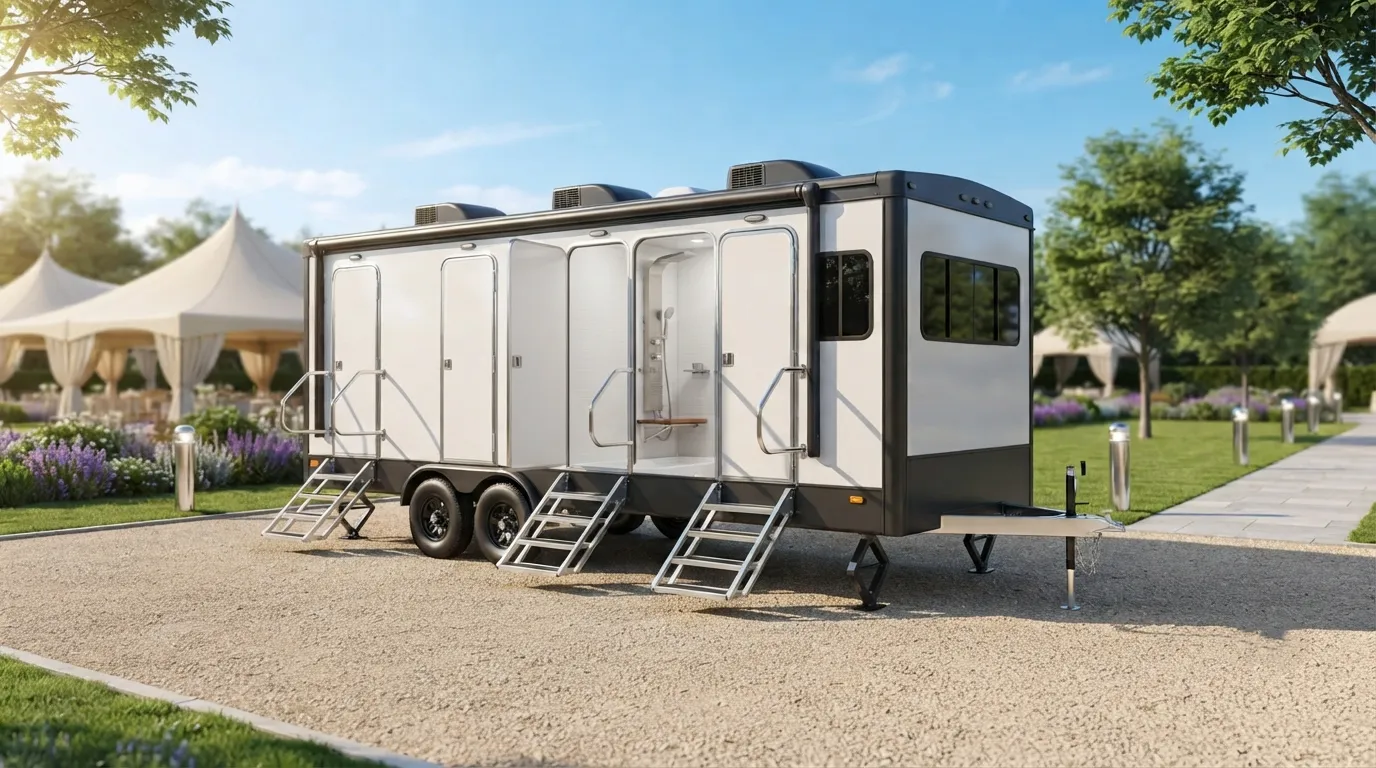
Yes, and the difference is foot traffic patterns, not the unit itself. A wedding or festival crowd moves in bursts, so event restroom rental placement should cluster units near exits and food areas, with at least one accessible unit per ADA Standards section 213.2 if several are grouped together. A temporary fence rental line often runs the perimeter of an event footprint, and units should sit inside that line, not outside it, so guests don't cross traffic to reach one. Construction crews move differently: workers spread across a site all day, so OSHA 1926.51(c) sets the ratio, one toilet for 20 workers or fewer, scaling up from there. A restroom trailer rental makes sense for a longer Chandler build where crew size stays steady, while single units suit a short driveway job better than a trailer would. If you're staging a county fair restrooms setup or a golf tournament restrooms layout, plan clusters near parking, not the far end of the grounds.
How far from a building does a porta potty need to sit?
There's no fixed distance in the codes we can cite, but keep units off building entrances and away from HVAC intakes. Give the service truck a straight shot, and don't block a fire lane. Ask Chandler Porta Pros to walk the site before delivery if you're not sure.
Can a porta potty sit on asphalt or concrete?
Yes, and it's often the easiest surface, since ADA Standards section 302.1 wants stable, firm, slip resistant ground anyway. Avoid painted lines that get slick when wet, and skip any slope steeper than what a wheelchair ramp allows under ADA Standards section 405.2.
What if the only flat spot is near a septic line?
Move it if you can. A residential septic tank gets pumped every 3 to 5 years, and heavy foot traffic or truck weight over the line risks damage. Check septic pumping service or how often to pump a septic tank before you finalize a spot near known tank locations.
Does a mobile office trailer need the same placement care?
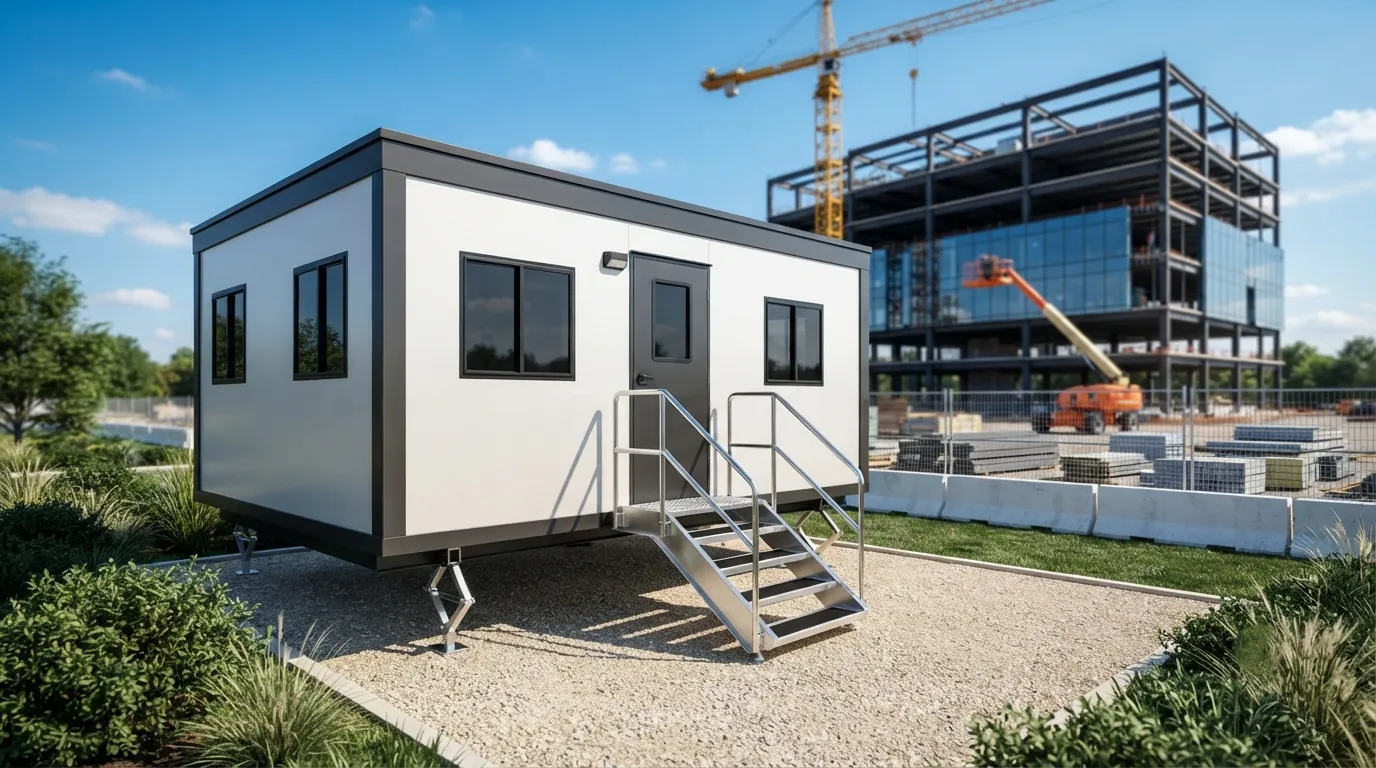
Similar rules, different scale. A mobile office trailer rental needs a wider, more level pad than a toilet, plus clearance for the door swing and any steps. If a trailer door needs replacing mid-rental, ask about mobile office trailer replacement doors directly with the rental provider rather than guessing at a fit.
Who do I call if placement changes mid-project?
Call Chandler Porta Pros directly, or use request a quote to describe the new spot. Moving a unit once it's placed usually costs less than a missed service visit, so flag changes early rather than after the truck's already on route through Chandler.
Next step
Get a delivery date
Tell us the address, the dates and the headcount. We size the order and confirm the route.